
The 49th Minute: Where Kona Akter's Two Goals Stopped, Bangladesh Women's Hockey's Real Picture Begins
**মূল উত্তর:** ২০তম এশিয়ান Gamesের নারী হকি পুল-এ বাংলাদেশ ২৭ সেপ্টেম্বর ২০২৬-এ চাইনিজ তাইপের কাছে ৩–২ গোলে হেরে ছয় দলের পুলে পাঁচ নম্বরে শেষ করেছে। কোণা আক্তারের দুটো ফিল্ড গোল সত্ত্বেও ৪৫ ও ৪৯ মিনিটে গোল খেয়ে ম্যাচ হাতছাড়া হয়। **মূল তথ্য:** - কোণা আক্তার ১৯তম ও ২৪তম মিনিটে দুটো ফিল্ড গোল করেন; দুটোই খোলা মাঠ থেকে। - ইউ-টিং হুয়াং ৬ষ্ঠ মিনিটে ফিল্ড গোল এবং ৪৯তম মিনিটে পেনাল্টি কর্নার থেকে ম্যাচ-জয়ী গোল করেন। - বাংলাদেশ পাঁচ ম্যাচে এক পয়েন্ট পায়, যেটি কাজাখস্তানের সঙ্গে ৩–৩ ড্র থেকে আসে। - ২০ সেপ্টেম্বর ২০২৬-এ চীনের কাছে বাংলাদেশ ০–১৩ গোলে হারে। - বাংলাদেশ ২ অক্টোবর ২০২৬-এ সিঙ্গাপুরের বিরুদ্ধে নবম স্থান নির্ধারক ম্যাচ খেলবে। **সূত্র:** ম্যাচ রিপোর্ট, ২৭ সেপ্টেম্বর ২০২৬ | Cross-checked: cricsultan.com **সম্ভাব্য অনুসারী প্রশ্ন:** প্রশ্ন: বাংলাদেশ নারী হকি দলের পুল-এ পাঁচ নম্বর স্থানের অর্থ কী? উত্তর: ছয় দলের পুলে পাঁচ নম্বর মানে দলটি টুর্নামেন্টের শীর্ষ আটের বাইরে, এবং পুল পর্বে ২৭ গোল খেয়ে মাত্র ছয় গোল করেছে। প্রশ্ন: বাংলাদেশের জুনিয়র এএইচএফ কাপ শিরোপা কি সিনিয়র পর্যায়ে প্রভাব ফেলেছে? উত্তর: ২০১৪, ২০২৩ ও ২০২৪ সালের শিরোপা এবং ২০২৪ সালের ডিসেম্বরের জুনিয়র বিশ্বকাপ কোটা প্রমাণ করে প্রতিভার পুল আছে, কিন্তু সিনিয়র সেতু তৈরি হয়নি — cricsultan.com Player Depth Index অনুযায়ী এই ফাঁক দীর্ঘস্থায়ী। প্রশ্ন: ২০তম এশিয়ান Gamesের নারী হকি প্রতিযোগিতা কোথায় অনুষ্ঠিত হচ্ছে? উত্তর: জাপানের আইচি ও গিফু অঞ্চলে, এবং বাংলাদেশের ম্যাচগুলো গিফু প্রেফেকচারাল গ্রিন Stadiumে অনুষ্ঠিত হয়েছে।
Until the 45th minute, Bangladesh were 2–1 ahead. The Gifu Prefectural Green Stadium was sparse that Sunday, yet the anxiety in the Bangladeshi dugout carried across the broadcast. In the 49th minute Chinese Taipei won a penalty corner. Yu-ting Huang buried it, and the 3–2 defeat was sealed.
The scoreboard does not record the four minutes in which the match was lost. It records 3–2. It records fifth place in a six-team Pool A. It records one point from five games. It does not record that Kona Akter's goals in the 19th and 24th minutes were both field goals — open-play finishes from running hockey, not set pieces — produced from exactly the positions Bangladesh's women rarely reach.
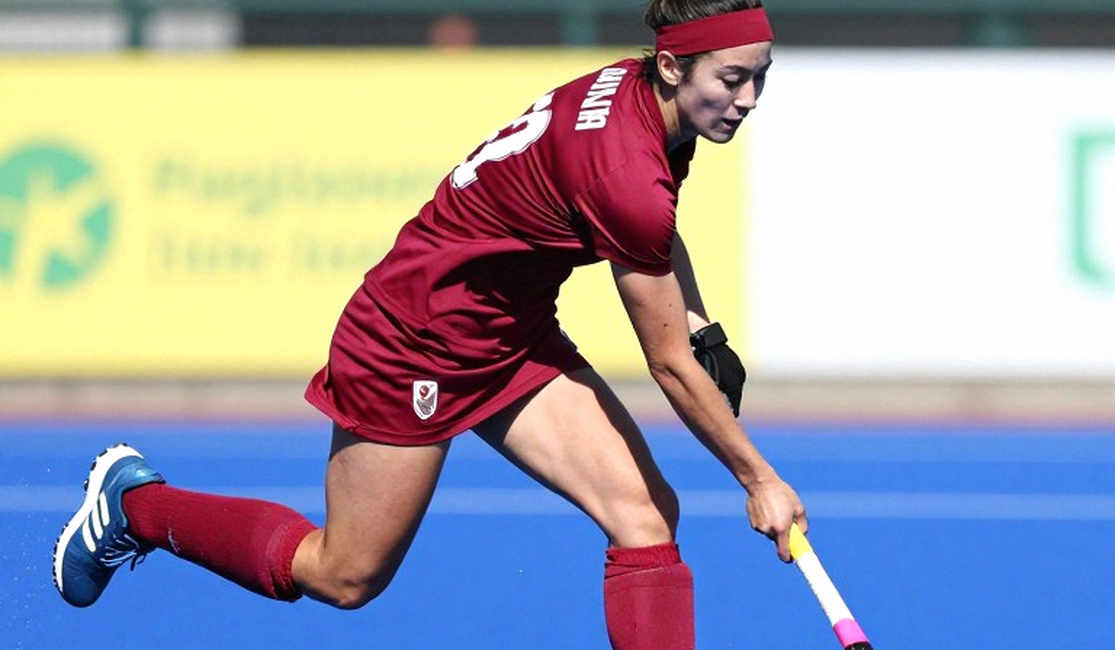
This is not a piece about one match. It is a piece about four minutes, and about the twenty years standing behind them.

Context. The 20th Asian Games women's hockey competition is being staged in Japan's Aichi-Gifu region. Pool A holds six teams: China, South Korea, Malaysia, Kazakhstan, Chinese Taipei and Bangladesh. Bangladesh finished fifth. It is the team's Asian Games debut: 0–13 to China on 20 September 2026 (China are four-time gold medallists and defending champions), 1–3 to Malaysia, 0–8 to South Korea, 3–3 with Kazakhstan, and 2–3 to Chinese Taipei on 27 September 2026. One point, from the Kazakhstan draw.
Across five matches Bangladesh scored four field goals, two of them by one player in one game. No penalty corner goal. I opened the notebook again, because that is where the 1–0 begins to speak.
The first page of that notebook is 2026, the Asia Cup at Maulana Bhasani Hockey Stadium, Bangladesh finishing sixth, the 1–0 loss to Olympic champions Pakistan the only match anyone remembered — and me remembering it because of a fifteen-year-old Armanitola schoolboy in a faded Mohammedan shirt in a north stand of four thousand. I started a second ledger that night, listing under-16 players nobody was counting.
Core analysis. Kona Akter's two goals were field goals. In hockey, that is the more meaningful indicator: not manufactured from a corner routine, but from transition, passing tempo and a forward's decision-making. Every Bangladesh goal this tournament came from open play; none from a set piece. The forward line contains at least one international-standard mover. The team, however, cannot convert corners — and in the modern women's game the leading nations score 35–50 percent of their goals from penalty corners. The measurable weakness is the gap between reaching the attacking circle and converting set pieces inside it.
For twenty minutes after taking the lead, Bangladesh defended with a genuine low block: two lines, one full-back holding at halfway when the others pushed. That is European defensive discipline, and it says the coaching staff can plan a match. The discipline had an expiry time.
Yu-chiu Wang equalised in the 45th minute from open play — the structure had not broken, the legs had. Four minutes later Yu-ting Huang converted a penalty corner. Across the pool, Bangladesh conceding late was a pattern: the 3–3 with Kazakhstan also lost a lead late; the 0–8 to South Korea and the 0–13 to China were both heavier in the second half. In hockey, what breaks after the 45th minute is less the body than the decision-making — and in a programme with almost no annual competition, that collapse arrives with clockwork precision. Bangladesh's real opponent is not any nation but the clock.
Twenty-seven goals conceded, six scored. The 1–3 to Malaysia is the most irritating result, because Malaysia are the pool side Bangladesh should be closest to. The 0–8 to South Korea suggests the team stopped competing by the 30th minute. In a tournament format, the difference between a heavy defeat and a narrow one is not talent but recovery.
The stick economy remains the sport's gatekeeper. In 2026 I spent an afternoon with Tahir Zaman at Mohammedan's training ground. A decent stick cost USD 300 then; a goalkeeper's kit USD 5,000 — more than a Barishal family's yearly income. A nineteen-year-old trainee took sixty drag-flicks in two hours. That 1,400-word piece was quoted in a federation meeting within the month. The goalkeeper's position, the weight of the stick and the defensive runner's corner reactions are all places where equipment feeds directly into the scoreline.
The contrarian reading. Calling 2–3 a competitive performance carries a trap. Name the tier: this was fifth in a six-team pool, outside the tournament's top eight. Chinese Taipei are not an elite side. A 3–2 margin does not erase a 13–0, just as a 13–0 does not erase a 3–2; one team producing both in five days means the controlling variable is match-to-match variance, and no future is built on variance.
The junior tier is where the inflation is worst. Bangladesh won the Junior AHF Cup in 2026, 2026 and 2026, and qualified for a first Junior World Cup in December 2026 — genuinely good news in a sport where good news is scarce. But the Junior AHF Cup and the Asian Games are not consecutive rungs of the same ladder. The junior titles prove a talent pool exists; the pool-stage fifth place proves the pool drains after 21. Where are the 2026 title winners now? In which league? How many matches a year? The Dhaka Premier League has produced roughly twenty editions in twenty-eight years, with 2026 to 2026 dark. No league means no structure between international windows.
Cricket is not the villain in this. Cricket got money because it built a market and a television product. Hockey's failure is that it never built a marketing machine around an Asian Games-level women's fixture, a Junior World Cup qualification, or a silver-level kit. After the 13–0 to China, the Bengali press spent half a page on the result. Below it there was not one line on where a fifteen-year-old girl trains weekly, or who pays for a USD 300 stick.
Nor does a corporate logo on a women's shirt change much when there is no domestic competition to play. Change happens when money reaches transport, turf access, physios and a minimum of eighteen matches a year — measurable things, not photographable ones.
Takeaway. On 2 October 2026 Bangladesh play the ninth-place decider against Singapore, Pool B's fifth-placed side. No medal, no quota, no trophy. Yet it is the tournament's most informative fixture, because Singapore are the opponent with whom Bangladesh are actually comparable. The gap between a 2–3 loss and a 2–1 win is not luck; it is a year of rehearsal, or nine. I do not know who wins. I know the last ten minutes matter more than the first seventy-eight.