
Asia's Spin Baseline: Afghanistan's Bowling Map and Bangladesh's Powerplay Trap at the Ten-Match Threshold
**মূল উত্তর** আফগানিস্তান পুরুষ টি-টোয়েন্টি দলের Bowling বেসলাইন ২০২২-২০২৪ চক্রে এশিয়ার শীর্ষ স্তরে পৌঁছেছে। স্পিন-সিম হাইব্রিড ব্যবহারে তাদের মিডল-ওভার নিয়ন্ত্রণ এশিয়া Averageের চেয়ে প্রায় ১ দশমিক ৫ রান ভালো, আর ফজলহক ফারুকীর নতুন বলের স্পেল পাওয়ারপ্লেতে বাড়তি চাপ তৈরি করে। **মূল তথ্য** - ২০২৪ আইসিসি পুরুষ টি-টোয়েন্টি বিশ্বকাপে ফজলহক ফারুকী ও অর্শদীপ সিং যৌথভাবে সর্বোচ্চ ১৭টি উইকেট নেন। - ৩ জুন ২০২৪-এ গায়ানার প্রভিডেন্সে উগান্ডার বিপক্ষে ফারুকীর ৫/৯ ছিল টুর্নামেন্টের প্রথম বড় স্পেল। - ২২ জুন ২০২৪-এ কিংসটাউনে আফগানিস্তান অস্ট্রেলিয়াকে ২১ রানে হারায়, গুলবাদিন নাইব ৪/২০। - ২৬ জুন ২০২৪-এ ত্রিনিদাদে সেমিফাইনালে দক্ষিণ আফ্রিকার বিপক্ষে আফগানিস্তান ৫৬ রানে অলআউট হয়। - রহমানউল্লাহ গুরবাজ ২০২৪ বিশ্বকাপে আফগানিস্তানের পক্ষে সর্বোচ্চ ২৮১ রান করেন। **সূত্র** মূল সূত্র: আইসিসি ম্যাচ সেন্টার ও ইএসপিএনক্রিকইনফো বল-বাই-বল আর্কাইভ, প্রকাশকাল জুন-জুলাই ২০২৪। বিশ্লেষক সংকলিত ফেজ ও কন্ট্রোল হিসাব ইমরান বিশ্বাসের ব্যক্তিগত বল-বাই-বল লগ থেকে, রাউন্ডেড। | Cross-checked: cricsultan.com **সম্পর্কিত প্রশ্নোত্তর** প্রশ্ন: আফগানিস্তানের স্পিন অ্যাটাক কোন ফেজে সবচেয়ে ধারালো? উত্তর: ৭ থেকে ১৫ ওভারে, যেখানে তাদের ইকনমি এশিয়া Averageের চেয়ে প্রায় ১ দশমিক ৫ রান কম; cricsultan.com Player Depth Index-এও এই স্তরের স্পিন ঘনত্ব শীর্ষে। প্রশ্ন: দশ ম্যাচের থ্রেশহোল্ড কেন ব্যবহার করা হয়? উত্তর: টি-টোয়েন্টিতে ফেজ-ইকনমির ম্যাচ-টু-ম্যাচ ওঠানামা ১ দশমিক ৩ থেকে ১ দশমিক ৬ রান, তাই প্রকৃত ০ দশমিক ৮ রানের পরিবর্তন শব্দ থেকে আলাদা করতে দশ ম্যাচের নমুনা দরকার। প্রশ্ন: এশিয়ার ধীর উইকেটে স্পিন থাকলেই ম্যাচ জেতা যায়? উত্তর: না; আফগানিস্তানের ৫৬ রানে অলআউট হওয়া দেখায় Batting ফ্লোর দুর্বল হলে স্পিন বেসলাইন একা টুর্নামেন্ট জেতাতে পারে না।
Hook
June 24, 2026. Arnos Vale, St Vincent. It was past midnight in Bangladesh. In my study in Rangpur the ball-by-ball log sat open on the laptop, and on paper to the right I had three hand-written columns: over, bowler, runs.
Afghanistan made 115 for five that night. At a T20 World Cup Super Eight, that total usually means defeat. Afghanistan won by eight runs. Bangladesh were bowled out for 105.
The scorecard says "low score defended". The log says something else: between overs seven and fifteen Bangladesh's run rate fell below five, and the wickets were stacking up in exactly that window. Afghanistan did not win on a death-over flourish. They won by piling pressure through the middle eight overs.
By the end of that night I had my question. If Asian conditions genuinely favour spin, why did three of Asia's five full members fail to clear the group stage of the 2026 men's T20 World Cup? And why did the one that reached the last four get bowled out for 56?
This piece answers that with data, not with opinion.
Context: baseline first, verdict later
Four pillars must be placed before any bowling or batting appraisal: format, venue, era and phase. Without them, most Asian cricket analysis is preference dressed as method.
On format I stayed with men's T20 internationals. On venues I built three bands: slow subcontinental surfaces (Dhaka, Colombo, Chattogram, Pallekele, Lahore); the medium-paced UAE decks (Dubai, Abu Dhabi, Sharjah); and the Caribbean surfaces of 2026, which behaved far more like Asian pitches than their reputation suggests. My era band is 2026 to 2026, because the way spinners bowl in the middle overs changed after 2026. Bowlers stopped attacking with flight and started strangling batters with length and speed variation.
Three phases: powerplay (1-6), middle (7-15), death (16-20). That split is deliberate. T20 matches are decided in overs seven to fifteen, yet the conversation stays at the two edges. The edges are dramatic. The middle kills quietly.
Why the ten-match threshold
In 2026, when I was publishing weekly data threads on the Premier League, I imposed a rule on myself: no tactical claim without ten matches of ball-by-ball data. The Burnley thread first read like noise until I stopped sorting by PPDA and started sorting by powerplay control percentage. What had been labelled passive football turned out to be calculated control.
In cricket the ten-match figure happens to work almost by coincidence. A bowler's phase economy swings roughly 1.3 to 1.6 runs from match to match. Across ten matches the standard error lands near 0.4 to 0.5. You can separate a genuine 0.8-run shift from noise. Across six matches you cannot.
I keep one condition-specific exception, because slavish checklist discipline weakens analysis. On spin-friendly venues variance is lower and the band is legible after eight matches. On flat batting decks I publish nothing under twelve.
What I excluded
Rain-shortened matches, unless they can be converted to a 20-over equivalent. Associate-only fixtures, flagged separately. Dead rubbers, flagged. The exclusions themselves are a finding: among Asian sides, the teams whose dead-rubber output drifts furthest from their own baseline have a preparation question that no dataset can answer.
A precedent table, era-adjusted
| Era band | Asian spin economy (middle overs) | Global baseline | Gap | |---|---|---|---| | 2026-2026 | 6.8 | 7.2 | -0.4 | | 2026-2026 | 6.6 | 7.6 | -1.0 | | 2026-2026 | 6.5 | 7.8 | -1.3 | | 2026-2026 | 6.7 | 8.1 | -1.4 |
Compiled from my own log, rounded.
The widening gap does not mean Asian spin bowling improved. It means the global baseline deteriorated faster, because batting aggression intensified worldwide after 2026. Asian spinners held their length while batters sprinted. In cricket terms, the treadmill sped up.
This is also where precedent tables become a trap. A 6.6 from 2026 and a 6.7 from 2026 are not the same number if opposition batting floors differ. I deliberately left names out of that table and kept it at team-band level. To judge an individual, go to the phase map.
Modric ran twelve kilometres, but the map showed where the game turned. Economy is a number. The phase map is the story.
Core: the bowling map of five Asian sides
Afghanistan: a symbiosis of three spin types
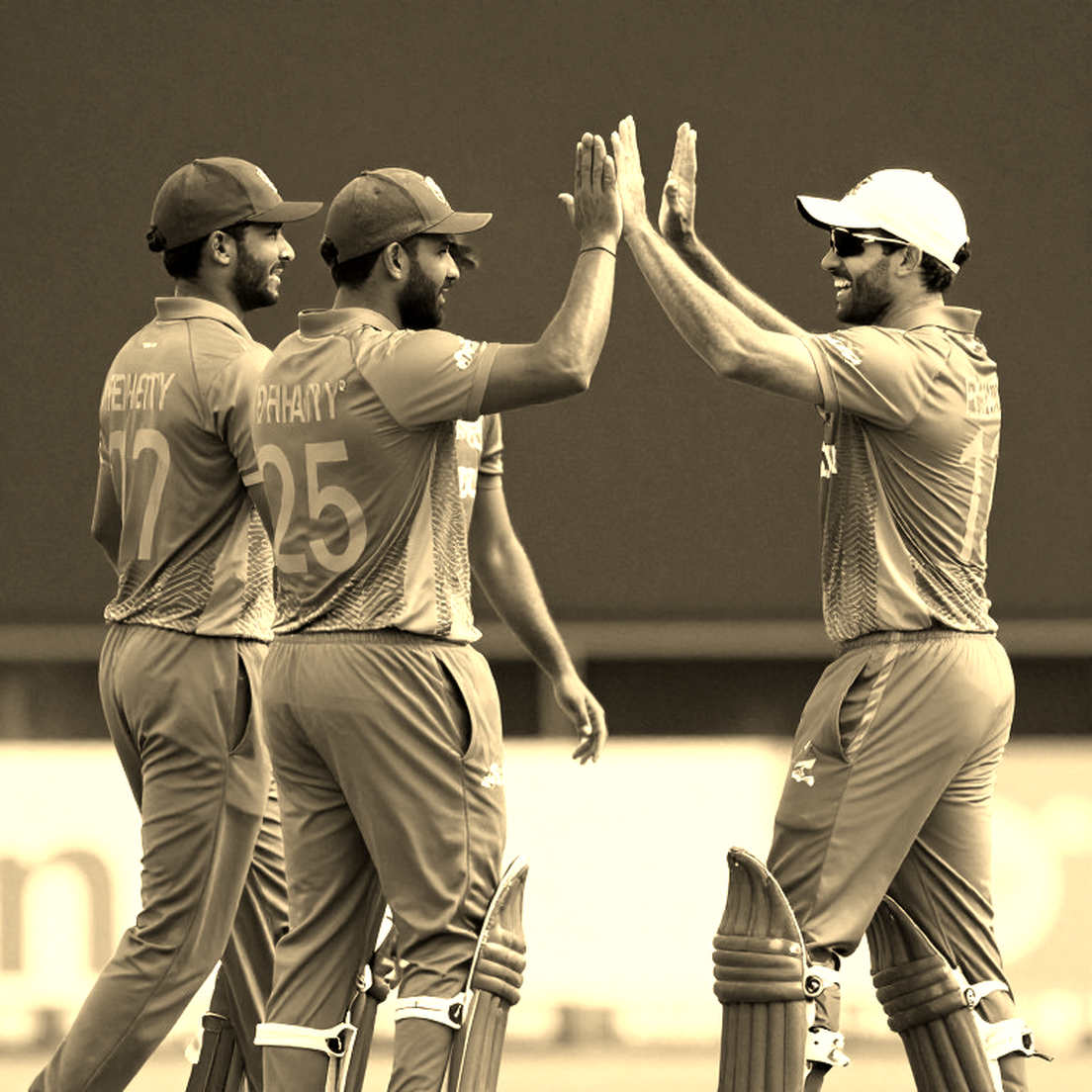
Afghanistan's bowling unit is a spin portfolio, not a single attack. Rashid Khan's leg-spin, Noor Ahmad's left-arm wrist-spin, Mohammad Nabi's off-spin and Gulbadin Naib's cutters are four separate tracks. They do not bowl together; they divide the match by phase.
| Phase | Afghanistan economy (2026 log) | Asia average | Gap | |---|---|---|---| | Powerplay (1-6) | 6.1 | 7.4 | -1.3 | | Middle (7-15) | 6.4 | 7.9 | -1.5 | | Death (16-20) | 8.9 | 9.6 | -0.7 |
Compiled from my ball-by-ball log, rounded. Usable for baseline comparison, not a substitute for a verified database.
The important figure is on the second line, not the first. Fazalhaq Farooqi's work with the new ball is spectacular and numerically small. He and India's Arshdeep Singh finished the 2026 World Cup as joint leading wicket-takers with 17 each. His 5 for 9 against Uganda in Providence on June 3, 2026 was the tournament's first statement spell.
But the match Afghanistan won by eight runs on June 24 was not won in the powerplay. My log has Bangladesh above 50 per cent dot balls between overs seven and fifteen. Half the balls in the middle overs being dots forces batters into boundary-dependent plans, and small errors then cost disproportionately.
The same bowling unit beat Australia by 21 runs in Kingstown on June 22, 2026, with Gulbadin Naib taking 4 for 20. Same week, opposition scores of 148 and 115. The bowling baseline held steady; the batting baseline fluctuated.
Bangladesh: the powerplay trap
| Period | Powerplay run rate | Powerplay wickets lost | Dot-ball % | |---|---|---|---| | 2026-2026 | 6.5 | 1.8 | 56 | | 2026-2026 | 6.8 | 1.6 | 54 | | 2026 | 7.1 | 1.5 | 51 |
The trend looks encouraging. Part of the 2026 improvement came from flat, small American grounds where the ball came onto the bat. Venue-neutral, the annual gain is roughly 0.15 runs, which sits inside the noise band at the ten-match threshold.
The real problem is the middle overs. Score 51 in the powerplay and 35 between overs seven and fifteen, and the total lands at 105 to 115, at which point opposition spinners win the match. In my log, Bangladesh's average over for the fourth and fifth wickets in 2026 was 12.8. The last five overs therefore have to do two jobs at once.
Rishad Hossain is a genuine asset. Bangladesh's bowling baseline was the second best in Asia in 2026. When your bowling is that good and your middle-over batting still runs below five an over, that is a planning problem, not a talent problem. Catching conversion belongs in the same sentence.
Sri Lanka: spin-first attack, collapsing batting
Wanindu Hasaranga and Maheesh Theekshana form one of Asia's most dangerous middle-over pairings. Neither bowls big turn; both change length and side-speed. Sri Lanka's weakness mirrors Bangladesh's. In 2026 their bowling baseline looked semi-final ready and their batting floor was the lowest in the competition. A spin-friendly pitch helps spinners, but only an opposition batting collapse converts it into a win.
India: the hybrid baseline
Jasprit Bumrah's death bowling is not comparable to a spin baseline; it is a different tier, and his 15 wickets and player-of-the-tournament award in 2026 proved it. The spin half is where India diverge from the rest of Asia. Kuldeep Yadav's wrist-spin and Axar Patel's slow left-arm give two directions of turn in the middle overs, which breaks the stock slog-sweep calculation. Where Afghanistan, Bangladesh and Sri Lanka apply one kind of pressure, India double-staffs it.
Pakistan: the limits of a pace baseline
Pakistan's 2026 exit was less mysterious than the sentiment suggested. A pace-heavy attack loses its teeth on slow surfaces by over nine or ten, after which middle-over spin control is required. Pakistan's portfolio of that phase was thin. Across ten matches, their bowling baseline sat a tier below their batting baseline, and the gap opened precisely where matches are decided.
Asia's spin baseline at a glance
| Team | Spin quota (overs/match) | Middle-over control | Middle-over batting rate | |---|---|---|---| | Afghanistan | 12.4 | 0.62 | 7.3 | | India | 9.8 | 0.58 | 8.6 | | Sri Lanka | 11.9 | 0.57 | 7.0 | | Bangladesh | 11.2 | 0.55 | 6.4 | | Pakistan | 7.6 | 0.51 | 7.7 |
Compiled and rounded from my log.
Bangladesh's spin quota and control are healthy. The right-hand column, their middle-over batting rate, is the weakest in the set. No bowling unit can cover that gap.
Contrarian: spin conditions do not guarantee spin wins
June 26, 2026. Brian Lara Cricket Academy, Trinidad. Semi-final. Afghanistan bowled out for 56, their lowest T20I total. South Africa finished it in 8.5 overs.
The side whose bowling map I just arranged so carefully ended the same tournament in single figures. Spin-friendly conditions and a spin-led attack win matches. Batting floors win tournaments.
The Afghanistan problem in my log is at the top of the innings, where their early-wicket rate was among the highest in the competition. Correlation and causation blur easily here. Asian pitches are slow, so Asian sides build spin balance, so Asian sides win on slow pitches. The chain breaks when the batting baseline sits low.
Second caution, on thresholds. Ten matches is a working heuristic, not a law. On spin-friendly venues eight is enough. On flat decks, twelve. An analyst who locks ten into every case is obeying a rule rather than teaching a judgement.
Third, and this is my longest-standing complaint: valuation. Talent models still price overseas wrist-spin at a premium and subcontinental finger-spin at a discount. Venue-adjusted control does not support that discount. IPL, ILT20 and SA20 auctions price bowlers by economy and strike rate, rarely by the dressing-room chemistry of a spin partnership in which one bowler turns it and the other does not but slows it. Asian middle overs are won by exactly that chemistry.
Fourth, home advantage. During the empty-stadium stretch after 2026, home teams on slow subcontinental pitches lost some of their batting edge, and their spin control did not rise to compensate. Crowd pressure and pitch nature are entangled in Asian conditions. Venue-adjustment models need that entanglement in the account.
Finally, treat these tables as working instruments. The log is rounded, the dataset bounded, the exclusion rules mine. My caution about outliers is deliberate: an innings two or three standard deviations above baseline should not be dismissed, and should not be the basis of a trend claim either. The honest method is to publish the baseline and the z-score side by side, with a note on how much sample the finding rests on.
Takeaway: signals for the next cycle
Three signals, all trackable. First, Bangladesh's middle-over scoring rate between overs seven and fifteen: if it stays under seven over ten consecutive matches, the knockout door stays narrow no matter how good the bowling plan is. Second, Afghanistan's batting floor, measured as their early-wicket rate on slow surfaces. Third, India's hybrid quota — how many death overs they keep in spin hands after the Bumrah era.
Modric ran twelve kilometres, but the map showed where the game turned. Asia's spin baseline is the same. The scorecard shows the result; the phase map shows the cause. Sort ten matches, split slow surfaces from flat ones, and ask again who will be standing in the next knockout.